Indigenous Peoples
We respectfully acknowledge that we are living on land stewarded for generations by the Ioway, Missouria, Otoe, Peoria, Osage, Sauk, and Fox People.
Our community is committed to learning more about this aspect of the land’s past, as well as connecting with indigenous people whose cultures have ties to this land. Many of our community members have and will continue to engage in support work and activism related to Indigenous rights.
According to a publication by Truman State University (our local college), during the time of “the Platte Purchase” in 1836, “a treaty was made as white settlers came onto the Ioway and Sac and Fox lands illegally and the tribes were pressured to relinquish their lands in Missouri. They received lands in present-day Kansas/Nebraska.” We have and continue to find physical evidence of the indigenous peoples on this land and grieve for their forced relocation and killing.
Settler Colonialism

In 1841, just 5 years after “The Platte Purchase”, the creation of Scotland County was approved by general assembly, of which “yet the center of population in the earliest days of the county’s history was near the town of Sand Hill.
This was, and is yet, only a small village, but in an early time was considered quite an important trading point. However, the first term of the county court ever held, was called at Sand Hill, and several terms thereafter were held at that place.”
County Histories of Northeast Missouri
As written in The Story of Rutledge, “When Sandhill became the county court and voting precinct, it grew into a town with streets, post office, blacksmith, and mayor. The town remained active for over fifty years, from 1835-1888.”

It is quite an interesting fact, for those that come see our tiny community, that Sandhill was at a time the county seat.
The Tiny County Seat
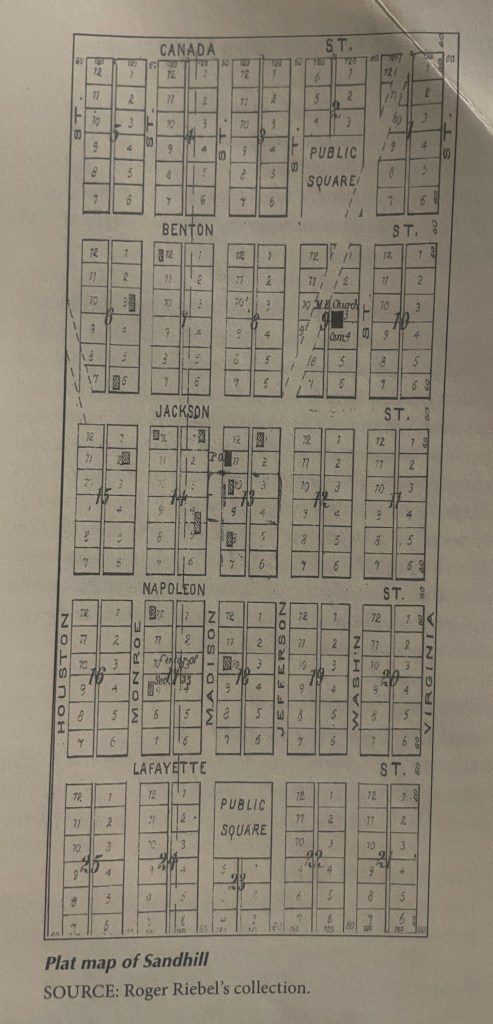
As recorded in the History of Scotland County, in the mid 1800s, the following businesses were located in Sandhill: two general stores, one drug and grocery store, a postoffice, a Church, a hotel, a doctor, a rustic chair manufacturing company, a brick making company, and a log schoolhouse.
When the railroad came through the neighboring town of Rutledge in 1888, most of the residents left Sandhill.
One of our homes is built on a foundation of timbers hand hewn from that period, and there are several barns, homes, and wells scattered about our community from the 1800s.

Intentional Community
80 years after most of the town left Sandhill, a new crop of settlers moved in.
Today the area is home to three intentional communities. Sandhill Farm was the first, forming in 1974, with Dancing Rabbit Ecovillage and Red Earth Farms being established in the 1990s.
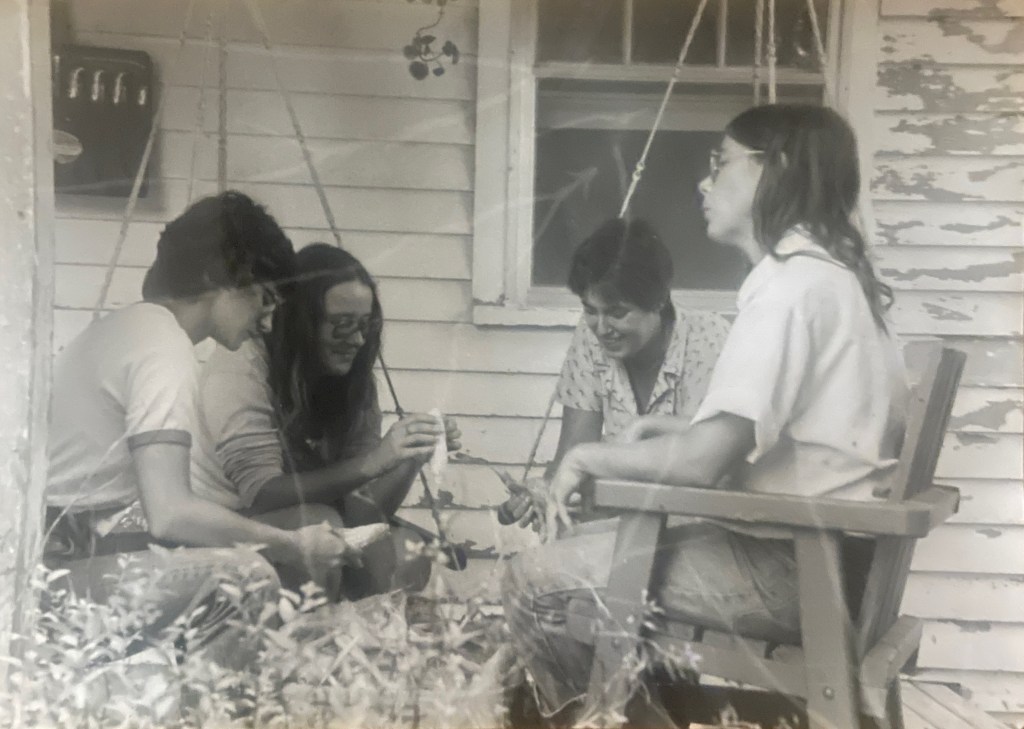
Our intentional community (Sandhill Farm) has now been active for about as long as the old settler town, the county seat, was populated.

 sandhill farm